The Art of Blending Functionality with Warmth in Modern Interiors
- Feb 5
- 2 min read
When we think of interior design, it’s easy to imagine spaces that are either purely functional or purely aesthetic. But the most memorable rooms are those that strike a delicate balance—where practicality meets personality, and every detail feels intentional.
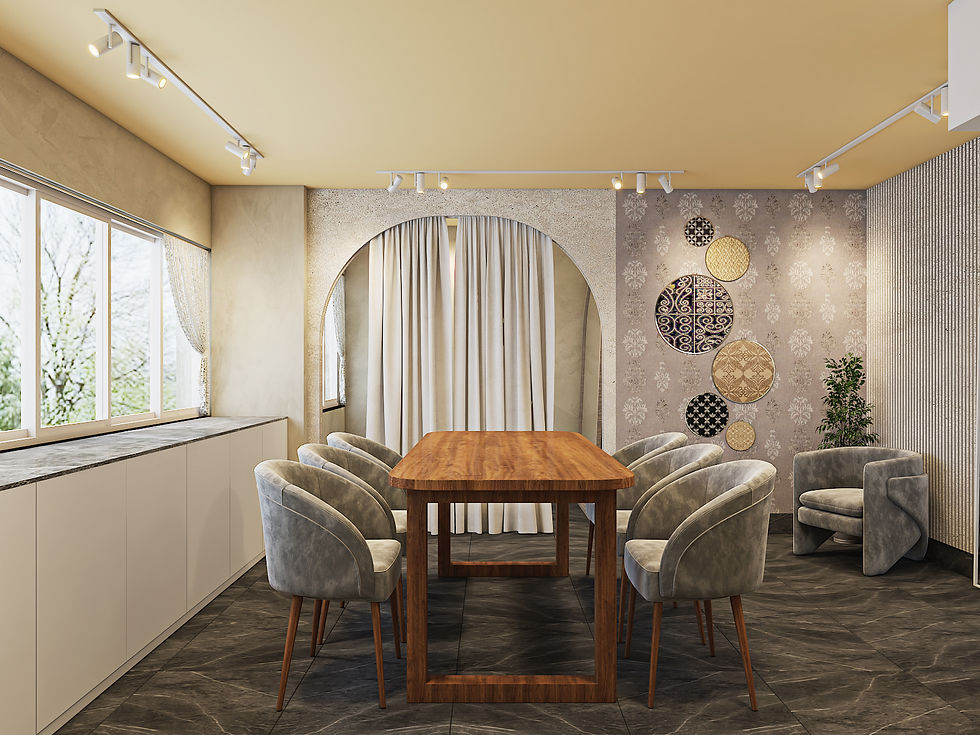
Take the space pictured above: a modern dining-meets-meeting area that radiates both sophistication and comfort. At first glance, it’s sleek and contemporary, but look closer and you’ll notice how warmth and character are woven into the design.
Key Design Insights
Texture as a storyteller
The dark marble-patterned flooring grounds the room with elegance, while woven wall art and textured paneling add depth and personality. This interplay of smooth and tactile surfaces prevents the space from feeling sterile.
Neutral tones, layered thoughtfully
Beige ceilings, gray upholstery, and natural wood accents create a calm palette. Yet, the layering of these neutrals—curtains, chairs, and decorative pieces—ensures the room feels inviting rather than monotonous.
Functional zones with fluidity
The long wooden table is versatile: perfect for dining, brainstorming sessions, or collaborative work. Surrounding elements like the armchair and potted plant soften the edges, making the space adaptable for both professional and personal moments. Art as an anchor
The circular woven wall pieces aren’t just decoration—they anchor the room with cultural and artisanal charm. They remind us that design isn’t only about utility; it’s about telling stories and sparking emotion.
Why This Design Resonates
What makes this room relatable is its duality. Many of us live in spaces that serve multiple purposes—our dining tables double as workstations, our living rooms host both guests and quiet evenings. This design embraces that reality, showing us that multifunctional spaces don’t have to compromise on style.
By blending clean lines with cozy touches, the room becomes more than just a showcase of modern design—it becomes a lived-in, adaptable environment. And isn’t that what we all want from our homes? Spaces that reflect who we are, while supporting the many roles we play in daily life.


Comments